
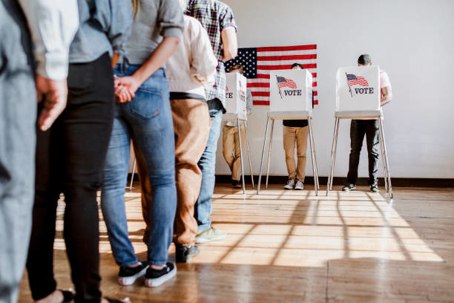
Can Noncitizens Vote? Why It Is Not Allowed, What Are the Consequences of Voting, and How to Stay Safe Before November 3
The midterm elections are on November 3, and with them comes a lot of noise about who can and cannot vote. If you are not a U.S. citizen, the short answer is simple: you cannot vote in federal elections, and registering or casting a ballot, even by honest mistake, can put your immigration future at risk. Here is why the rule exists, what the data really shows, what can happen if it is broken, and how to make sure it never happens to you.
Why noncitizens cannot vote in federal elections
Federal law is clear. The Illegal Immigration Reform and Immigrant Responsibility Act of 1996 explicitly prohibits noncitizens from voting in federal elections, and no state allows noncitizens to vote in statewide elections either. The restriction is older than that law. By 1924, every state had banned noncitizens from voting in federal contests, and in 1996 Congress added criminal penalties on top. It applies to everyone who is not a citizen, including green card holders, people on temporary visas, and people without legal status.
Voting is tied to citizenship, and the road to citizenship is deliberate. A person generally holds a green card for five years (three if married to a U.S. citizen) before they can apply to naturalize. Once you take the oath, you can register and vote. Until then, the ballot is off limits.
There is one nuance worth knowing. A handful of cities in California, Maryland, and Vermont, plus Washington, DC, allow noncitizens to vote in certain local elections. San Francisco, for example, lets noncitizen parents and guardians vote in school board elections, and the Maryland cities that allow it use separate ballots so noncitizens never receive a federal or state race. A 2021 New York City law was struck down by a state judge in 2022. If you do not live in one of these places, or you are not completely sure your local rules allow it, assume you cannot vote.
How common is noncitizen voting, really?
Rare, and usually accidental. The American Immigration Council reviewed the Heritage Foundation’s database of election fraud cases and counted 89 proven cases of noncitizen voting going back to 2000. That is about 5.5% of the 1,619 cases in the database and far less than 0.0001% of the votes cast. State audits point the same way. Utah reviewed more than 2 million registered voters and confirmed 27 noncitizen registrations. Georgia audited 8.2 million registered voters and identified 20 noncitizens who had registered, of whom just nine had ever cast a ballot. Reuters reporting, cited by the American Immigration Council, found that 129 people have been charged in federal court for voting as noncitizens over the last 30 years, with 73 convictions.
Those cases share a pattern. The most common story is not someone trying to cheat the system. It is a green card holder who registered or voted believing they were allowed to, or because someone told them it was fine. In a 2002 prosecution of 15 green card holders in Florida, 11 said they did not know they could not vote or had been told they could. Reuters found that nearly 80% of the federal convictions involved green card holders.
Government mistakes play a big part too. This July, New Jersey acknowledged that a software glitch at its motor vehicle agency registered about 6,600 people who had told the agency they were not citizens, and roughly 400 of them cast ballots. Similar errors have surfaced in Oregon and Texas. There is no evidence that any of this changed the outcome of an election.
What can happen if a noncitizen registers or votes
The consequences are serious, and they reach beyond the ballot box. Illegally voting in a federal election can bring a fine and up to a year in federal prison, and falsely claiming U.S. citizenship to register or vote can carry up to five years. On the immigration side, a conviction can lead to deportation and loss of legal status. Falsely claiming citizenship to register can also result in deportation or denial of future immigration status, even if no ballot was ever cast.
Prosecutors generally have to show that a person knowingly broke the law, which is why honest mistakes and deliberate fraud are treated differently. Even so, nobody should count on that distinction to protect them. Anyone who thinks they may have registered or voted by accident should speak with an immigration attorney before doing anything else, including before filing any application with USCIS.
How honest mistakes happen, and how to avoid them
Many people are automatically registered to vote when they apply for a driver’s license, which is where a lot of accidental registrations begin. A few habits protect you. Read every screen and every form at the DMV, answer the citizenship question truthfully, and decline voter registration if you are not a citizen. Never sign a voter registration form unless you are a citizen, because it requires you to affirm your citizenship under penalty of perjury. If a voter registration card or a ballot arrives in your name and you are not a citizen, do not fill it out and do not send it back, and talk to an immigration attorney about the safest way to correct the record. A green card, however long you have had it, does not carry the right to vote.
If you recently became a citizen, the opposite problem can happen. Records at the DMV do not always update right away after naturalization, and that lag is one reason people get flagged in voter list audits. In Ohio, the Secretary of State flagged 521 cases of potential noncitizen voting between 2019 and September 2023, and a news review found only one person who was ultimately charged. After you naturalize, update your information with the DMV, make sure your voter registration is current, and keep your naturalization certificate somewhere easy to find.
How the system can fix it
Experts across the political spectrum share the same goal: voter rolls that are accurate without wrongly pushing out eligible citizens. The Bipartisan Policy Center points to administrative fixes, such as modernizing DMV and election office technology, improving data sharing between motor vehicle agencies and voter registration officials, and using existing government data to verify citizenship behind the scenes. Twenty three states already have agreements with the USCIS SAVE system for this purpose.
Those tools are not perfect. The American Immigration Council reports that SAVE has produced false positives, citing one use in Missouri where 35% of the people flagged turned out to be naturalized citizens, and a Texas review that flagged U.S. citizens by mistake. In 2019, the Texas acting secretary of state resigned after his office wrongly questioned the citizenship of nearly 100,000 people, according to the Migration Policy Institute.
The larger national debate is about the SAVE America Act, which would require proof of citizenship to register, photo ID to vote, and ongoing citizenship verification. Supporters say stronger checks are needed to protect confidence in elections. Critics, including voting rights advocates, warn that millions of citizens born in the United States do not have a birth certificate or passport within easy reach and could be blocked from voting. Whatever Congress decides, the rule for noncitizens does not change: federal elections are for citizens only.
The midterms are less than a month away. If you are a citizen, make your plan to vote. If you are not yet one, stay informed, stay safe, and keep your eyes on the path that gets you to the ballot the right way, which is naturalization.
Not sure how voting could affect your immigration case? Call us at (510) 574-7377 to see how we can help you! |
Sources: This post draws on the Bipartisan Policy Center’s Four Things to Know about Noncitizen Voting (July 2026), the Migration Policy Institute’s Noncitizen Voting in U.S. Elections (September 2024), and the American Immigration Council’s Unpacking Myths About Noncitizen Voting (August 2026).