
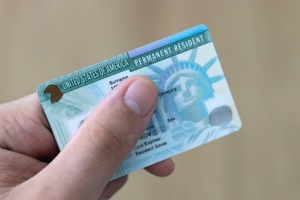
The federal government has revived the “public charge” rule, a policy that can make it harder for certain immigrants to get a green card if they use public benefits like Medicaid, food assistance, or housing support. If you or a family member is applying for a family-based green card, or if your household includes people with mixed immigration status, this change could affect the decisions you make about accessing public programs in the months ahead. Here is what the rule actually says, how it compares to the panorama of the last years, and what it means for you going forward.
What Is “Public Charge,” Exactly?
“Public charge” has been part of U.S. immigration law for more than a century. It refers to a “test” that immigration officials use to decide whether a noncitizen is likely to become primarily dependent on the government for support. Officers apply this test most often when someone is applying for a green card through a family member, or when someone is seeking admission to the United States or certain visa changes from abroad.
If an officer determines that an applicant is likely to become a “public charge,” that applicant can be found “inadmissible”, meaning their green card, visa, or entry to the U.S. can be denied. However, this test does not apply to everyone:
- It does not apply if you already hold a green card or permanent resident status
- It does not apply if you are applying for or already hold TPS, a U or T visa, asylum, refugee status, or Special Immigrant Juvenile status
- It does not apply if you are not seeking a green card and have no pathway toward one
It may affect you if you plan to apply for a family-based green card, if you hold a green card but leave the country for more than six months, or if you plan to apply for a visa or certain nonimmigrant status changes from inside or outside the U.S.
How the Rule Has Changed Over Time
To understand what is happening now, it helps to see how this rule has shifted back and forth over the last several years:
- 2019 (first Trump administration): Officials broadened the definition of “public charge” significantly, allowing denial of green cards to people who received a government benefit for more than 12 months within any three-year period, and considering a wide range of benefits including Medicaid, food stamps (SNAP), and housing assistance.
- 2021–2022 (Biden administration): Courts and the incoming administration rolled back the 2019 approach. A new rule limited the test to a narrower, traditional standard, generally only counting cash assistance for income maintenance and long-term government-funded institutional care. Non-cash benefits like Medicaid, SNAP, and housing vouchers were not considered.
- 2026 (second Trump administration): DHS has now finalized a rule that rescinds the 2022 Biden-era standard and revives a broader approach similar to 2019. The final rule was published in the Federal Register on July 17, formally published July 20, and takes effect September 18, 2026.
What Does the New Rule Actually Change?
The new rule does not publish a fixed list of benefits that will automatically disqualify someone. Instead, it directs immigration officers to make “individualized, fact-specific” determinations based on the “totality of the circumstances” of each applicant, considering factors such as age, health, education, skills, income, financial resources, family situation, and any use of public benefits.
This is a meaningful shift from the 2022 standard, which limited officers to considering only cash assistance and institutional care. Under the revived approach, officers have much broader discretion, and critics warn that the lack of a defined benefits list creates uncertainty for families trying to know what is safe to use.
According to USCIS, when reviewing a green card application, officers will look at information submitted with the application for permanent residence (Form I-485), the immigration medical exam form (Form I-693), and other evidence, including any receipt of means-tested public benefits. Officers may also review the sponsor's affidavit of support (Form I-864).
One important detail: according to guidance published alongside the rule, public benefits received before the rule's effective date generally will not count against an applicant once the new rule takes effect. However, certain benefits, like cash assistance for income maintenance and government-funded long-term institutional care, were already considered under the prior rule and will continue to be considered.
Why This Matters for Immigrant Families
Advocates and policy researchers have raised concerns that the rule's return will cause many eligible families, including U.S. citizen children in mixed-status households, to avoid benefits they legally qualify for, simply out of fear. During the 2019 version of this rule, similar concerns led thousands of families to stop using healthcare, food, and housing assistance, even though the rule was ultimately never used to deny a single application before it was struck down. Health policy researchers have previously estimated that a rule of this scope could lead millions of people, roughly half of them U.S. citizens in mixed-status families, to avoid seeking assistance they are entitled to.
It is also worth noting that some benefits programs, like CalFresh (SNAP) in California, are not automatically part of every public charge analysis, and the rules around which programs count can keep evolving. Because of this, decisions about enrolling in or disenrolling from a program should not be made based on rumors or unverified sources, they should be based on accurate, current, and personalized legal guidance.
What You Should Do Now
- Do not disenroll from a benefit you or your family currently qualifies for without first getting individualized legal advice. Leaving a program does not erase past records, and it may not even be necessary for your situation.
- Confirm whether the public charge test applies to your specific immigration goal. Many people, including asylees, refugees, TPS holders, and those with U or T visas, are exempt.
- Keep track of official effective dates. The new rule does not take effect until September 18, 2026 , the current narrower 2022 rule still applies until then.
- Talk to a licensed immigration attorney before making decisions about benefits, sponsorship, or green card timing.
Is your green card case at risk? Don't wait.
At Landerholm Immigration, A.P.C., we help immigrant families understand exactly how rules like this apply to their case. Contact us today for guidance on family-based green cards, public charge questions, and how to plan your case with confidence.
Oakland: (510) 491-0291
www.landerholmimmigration.com
1900 Embarcadero, Suite 310, Oakland, CA 94606