
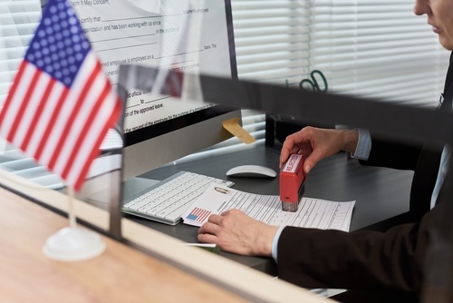
If you filed a petition or application months ago and still have not heard from U.S. Citizenship and Immigration Services (USCIS), you are far from alone. Across the country in 2026, many immigrants are waiting longer for decisions than at almost any point in recent memory. The good news is that a long wait is rarely a sign that something is wrong with your specific case. It usually means your file is sitting in a badly overloaded system. Here is what that backlog looks like right now, and the concrete steps to take when your case has been pending longer than it should be.
Just How Backed Up Is the System Right Now
USCIS is managing close to 11.6 million pending applications and petitions nationwide, according to a review of agency data by NPR. The American Immigration Council's own tracking shows that number climbing even further, to 12.1 million cases by the second quarter of fiscal year 2026, a 7.2 percent jump from a year earlier. At that pace, the Council estimates it would now take roughly 24 months just to clear the cases already in the queue, nearly double what it would have taken twelve months before. Congress has taken notice as well: a group of U.S. Representatives told DHS and USCIS this spring that the backlog had grown by close to two million applications since the start of 2025.
If your case is already in removal proceedings rather than with USCIS, the picture is separate but no less daunting. TRAC, the data research center at Syracuse University, counted just over 3.1 million active cases pending before the Immigration Court at the end of July 2026, about 2.3 million of which involve people who have already filed for asylum.
None of this is meant to be discouraging. It explains why the wait feels so long right now, and why a stalled case usually reflects the size of the queue rather than a problem unique to you.
Step One: Confirm Your Case Is Actually Outside Normal Processing Time
Before contacting anyone, check your own numbers first. USCIS publishes a processing time range for every form and office, and updates it regularly. Use the Check Case Processing Times tool on the USCIS website (www.uscis.gov) and enter your form type and the office handling your case. Alongside the estimated time, you will see a separate date called the receipt date for a case inquiry. If your receipt date falls before that date, your case is outside normal processing time and you can ask what is going on. If it falls after, your case is still within the expected range, and continuing to wait, while frustrating, is genuinely the accurate advice for now.
Step Two: File a Case Inquiry
Once your case qualifies, the first formal step is a case inquiry, which USCIS calls an e-Request. Submit one through your USCIS online account, the agency's e-Request page, or by calling the USCIS Contact Center at 1-800-375-5283, with your receipt number and filing date ready. USCIS generally responds within 30 to 60 days, often with a general update such as confirmation that a background check is pending, but it puts a person back in front of your case.
Step Three: Ask Your Member of Congress for Help
If a case inquiry does not move things along, many people reach out to their U.S. Representative or Senator. Congressional offices have staff dedicated to immigration casework who can formally request a status update from USCIS. They cannot order USCIS to approve your case or move you up in line, but they can confirm your file has not been lost, and sometimes get more specific answers than a standard inquiry does.
Step Four: Request Case Assistance from the CIS Ombudsman
If USCIS itself has not helped, the next stop is the Office of the Citizenship and Immigration Services Ombudsman, an independent DHS office separate from USCIS. Before it opens a case, you must have contacted USCIS within the last 90 days and given the agency at least 60 days to respond. Once you meet that threshold, request help by submitting DHS Form 7001, Request for Case Assistance, online.
(However, as of the date of this writing, this step isn’t currently functioning. On March 21, 2025, DHS placed all CIS Ombudsman staff except one Senior Executive Service member on 60-day paid administrative leave, and CRCL and OIDO were hit the same day. RFK Human Rights and two other nonprofits sued in D.D.C. (No. 1:25-cv-01270, Judge Reyes). On May 23, 2025, the court ordered the government to publicly announce that CRCL, OIDO, and the CIS Ombudsman remained open and able to perform statutory functions. DHS complied by posting short notes on each office's webpage saying the offices would remain open. Talk to a lawyer for an update about this situation. We’re here to help!).
Step Five: Sue them! Prepare and File a Mandamus / APA Lawsuit
When every administrative option has been tried and a case is still stuck well beyond normal processing time, the remaining option is federal court. A lawsuit seeking a writ of mandamus, sometimes paired with a claim under the Administrative Procedure Act, asks a judge to order an agency to finally decide a case, not to approve it, only to decide it. TRAC has reported a sharp rise in this kind of immigration delay lawsuit since 2025, and many attorneys now treat it as a realistic option once a case has been stuck a year or more with no administrative remedy left. It requires an attorney to prepare and file, and is generally treated as a last resort.
What About Cases in Immigration Court or Waiting Overseas
Delays look different depending on where your case sits. If you are in removal proceedings, your hearing dates are controlled by the immigration court itself, part of the Executive Office for Immigration Review, and moving a hearing depends on motions filed by your attorney of record rather than the tools above. If you are waiting on a family or employment based visa overseas, your case may have moved from USCIS to the National Visa Center, part of the State Department, which runs on its own timeline: as of August 2026 it was creating new cases within two to three weeks of receiving them and reviewing documents within four to five weeks, though your case cannot move to interview until your priority date is current on the Visa Bulletin.
A case that has gone quiet for months is stressful, and it is fair to want answers. The steps above, in order, are the right way to get them. If you are not sure where your case stands, our team can review your file and help you figure out the next move.
Not sure which step applies to your case? Call Landerholm Immigration at (510) 574-7377. Our team can review your file and tell you exactly where things stand. |
Sources: U.S. Citizenship and Immigration Services, Check Case Processing Times; USCIS e-Request; DHS Office of the Citizenship and Immigration Services Ombudsman, Case Assistance; U.S. Department of State, National Visa Center Timeframes; TRAC Immigration, Syracuse University, Immigration Court Quick Facts; American Immigration Council, USCIS Backlog Grows Even as Agency Gets Fewer Filings; and NPR, via WUNC.